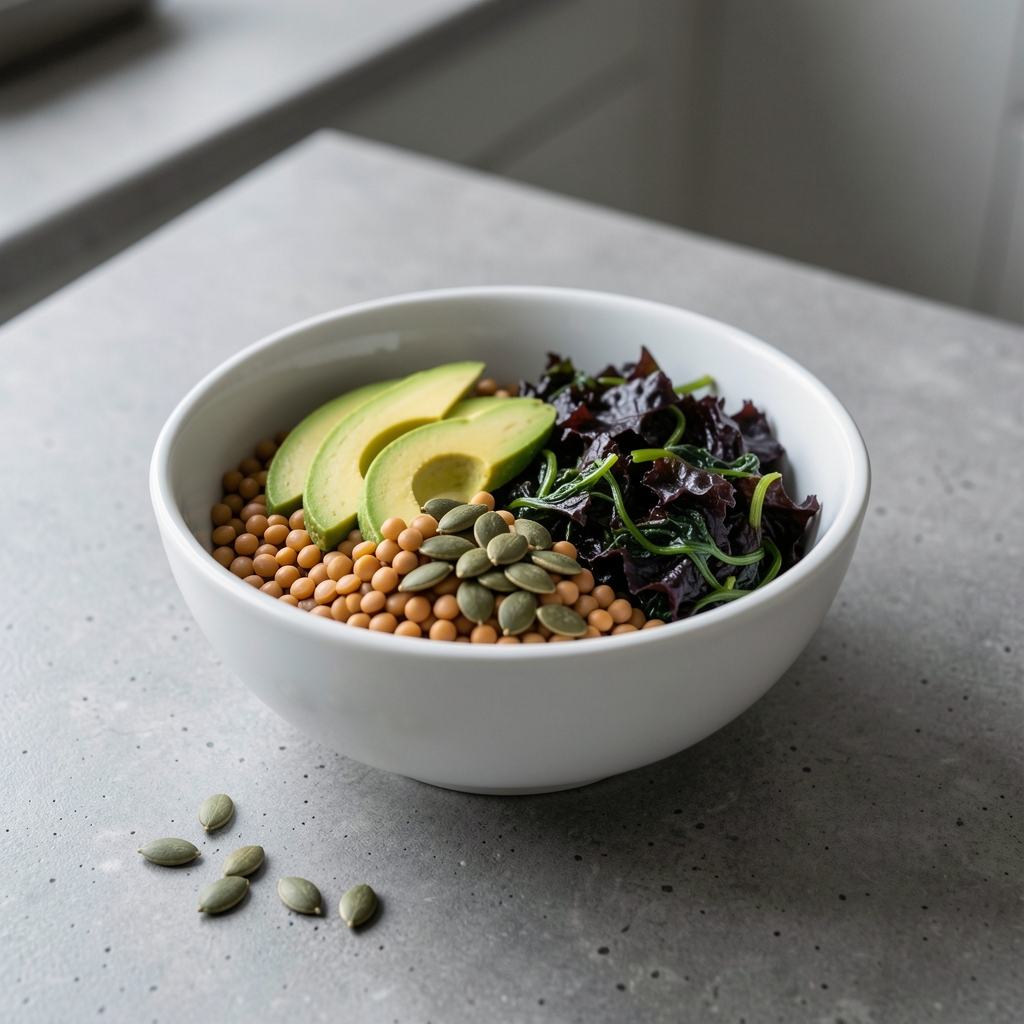
A plate of food is a composition. Like any composition, it succeeds or fails not through the quality of any single element but through the relationship between elements — the proportions, the variety, the presence or absence of what the body expects. Nutritionist guidance, distilled from decades of published research, has arrived at a framework for this composition that is simpler than most popular accounts suggest.
Macronutrients in Proportion
The most durable framework for meal composition in published nutritional guidelines divides the plate into three principal zones: vegetables and fruits occupying roughly half, complex carbohydrates occupying a quarter, and protein sources occupying the remaining quarter. This is not a rigid directive — it is a proportional model, and the specific foods filling each zone shift considerably depending on season, preference, and the demands of the day.
The dominance of the vegetable zone is significant. Vegetables and fruits are the primary sources of dietary fibre, micronutrients, and phytocompounds in the modern diet. Placing them at the structural centre of the plate — rather than treating them as accompaniments — reorganises the calorie composition of the meal without requiring active calorie monitoring. A half-plate of vegetables before other foods have been added is already a high-volume, low-energy-density foundation.
The protein zone — whether plant or animal in origin — contributes to satiety through mechanisms distinct from fibre. Protein requires more energy to process than either fat or carbohydrate, and it stimulates satiety signalling more consistently across meal types. For those with an active lifestyle or those engaged in sport and fitness, the protein-to-fibre ratio becomes a more considered variable; for the general population, the simple presence of a meaningful protein source on the plate is the relevant factor.

Whole Grains and Complex Starches
The carbohydrate quarter of the balanced meal is frequently the most contested in popular nutrition discussions. Refined carbohydrates — white bread, processed cereals, sugar-dense foods — occupy a different nutritional position than whole grains and complex starches. The distinction matters not in the abstract but in practice: the fibre content, the processing time in the digestive system, and the effect on post-meal energy stability differ substantially.
Whole foods in the carbohydrate zone — brown rice, quinoa, oats, barley, whole-grain bread, lentils — contribute fibre, B vitamins, and minerals that their refined equivalents lack. They also slow gastric emptying, which extends the window of satiety and moderates the rate at which available glucose enters the bloodstream. For anyone managing weight with a sustainable approach, this distinction is among the most practically relevant in everyday nutrition.
Portion control in the carbohydrate zone is often where meal composition becomes unbalanced. The default serving sizes of pasta, rice, and bread in home cooking and restaurant portions tend to exceed the quarter-plate model considerably. This is not a moral failing; it reflects the caloric density and satiety signalling of refined starches, which are engineered to encourage continued consumption. The quarter-plate guidance does not prohibit these foods — it contextualises them within a composition.
"The plate is the most legible record of a household's nutritional priorities. It requires no tracking, no application, no subscription. Only attention."
Eleanor Whitfield, Dalmor Quarterly
Reading Nutritional Diversity Through Colour
One of the more reliable heuristics in everyday nutrition is also one of the most visually immediate: the colour of a plate correlates meaningfully with its phytonutrient diversity. The pigments responsible for the colours of vegetables and fruits — carotenoids in oranges and reds, chlorophylls in greens, anthocyanins in purples and blues — are bioactive compounds with distinct nutritional roles.
A plate that is predominantly beige or white — white rice, chicken breast, white bread — is nutritionally legible at a glance: it is low in the range of phytocompounds that vegetables and fruits provide. Adding colour to the plate through the vegetable zone is not merely aesthetic; it is a proxy indicator of nutritional breadth. A colourful plate tends to be a nutritionally diverse plate.
The mindful eating literature, which overlaps substantially with the nutritional science in this area, observes that colour diversity on the plate also slows the pace of eating. A varied plate invites more considered engagement with the food than a uniform one. This slower pace allows satiety signalling to communicate more accurately before overconsumption has occurred — a mechanism particularly relevant for anyone managing calorie awareness without formal tracking.
Vegetables and fruits — prioritise variety of colour and seasonal availability. Aim for 3-5 distinct plant sources per main meal.
Complex carbohydrates — whole grains preferred. Brown rice, quinoa, oats, whole-grain varieties of bread and pasta.
Protein sources — plant or animal. Legumes, eggs, fish, poultry, lean cuts. Varies with activity level and weekly menu rotation.
Small amounts of unsaturated fat — olive oil, avocado, nuts, seeds. Not a structural zone but a consistent presence.
From Individual Plate to Weekly Structure
The single meal is the basic unit, but the week is the operative structure for nutritional planning. Nutritionist guidance consistently favours a weekly view over a meal-by-meal accounting, because variation across days naturally corrects for individual meal imbalances. A lunch that is protein-heavy and light on vegetables is not a nutritional failure if the preceding breakfast and the following dinner restore the broader proportional pattern.
Meal planning, understood as a weekly architectural exercise, asks a different set of questions than per-meal tracking. Rather than "how many calories is this dinner?", the planning orientation asks: "does the week contain sufficient variety in the vegetable zone, sufficient fibre-rich carbohydrate sources, adequate protein across different meal types, and reasonable portion sizes at each sitting?" The answers are largely visible without a calculator.
Home-cooked meals are the most reliable vehicle for this architecture. The home cook controls the ingredients, the proportions, and the preparation method in ways that restaurant and convenience food cannot match. The kitchen, from this perspective, is less a space for culinary performance and more a nutritional infrastructure — one that pays consistent dividends when organised around the principles of balance, variety, and whole-food sourcing.
Sport and fitness considerations add a further dimension to the weekly structure. On days with higher physical output, the carbohydrate and protein zones of the plate warrant attention: the body's demand for glycogen replenishment and muscle protein support increases proportionally with exertion. For those maintaining an active lifestyle, the balanced meal framework remains constant, but the quantities within each zone shift in response to the week's activity pattern.
The Case for Gradual Progress
The literature on weight management consistently identifies gradual progress — small, sustainable adjustments compounded over time — as the most reliable pathway to long-term change in body composition. This observation reframes the question of the balanced meal from a short-term intervention to a permanent orientation. The plate model described in this article is not a six-week programme; it is the structural default from which occasional variation departs and to which it returns.
The practical implication is that the architecture of the balanced meal need not be perfect at every sitting. A sustainable weight approach accommodates a generous meal at the weekend, a rushed lunch mid-week, and an evening that calls for something simpler than the ideal composition. What matters is the centre of gravity — what the household table looks like on average, across the full week, over the full year.
That centre of gravity is what the balanced meal framework provides. It is not a diet. It is a structural habit — one that, once established, becomes the default rather than the effort. The architecture, in this sense, builds itself over time.